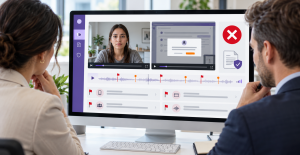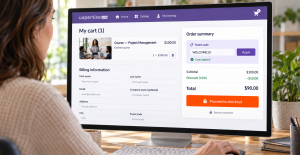
Recent changes to the Act to Promote Workforce Skills Development and Recognition—better known as Quebec’s 1% Training Law—represent excellent news for Quebec SMEs.
By expanding the types of eligible training activities and simplifying certain administrative processes, the government is finally recognizing a reality that businesses have long understood: learning doesn’t only happen in a classroom.
Coaching, mentoring, hands-on workshops, and on-the-job knowledge sharing now play a more significant role among eligible training activities.
In an article published by La Presse, the government explained that it aims to broaden the range of eligible training activities while reducing the administrative burden on employers—a change that Quebec businesses have been advocating for for many years.
The response has been particularly positive within the trucking industry. The Quebec Trucking Association has noted that the official recognition of coaching and mentoring activities finally reflects the reality on the ground in many sectors, where learning is largely driven by peer support and the transfer of practical expertise.
The Ordre des CRHA has also welcomed the announced administrative changes, stating that they will allow organizations to devote more energy to the actual development of skills rather than to the administrative management of compliance requirements.
The Canadian Federation of Independent Business (CFIB) has echoed this sentiment, describing the recognition of informal training as “a step in the right direction for SMEs,” particularly in a context where many small businesses already train their employees directly in the workplace.
For organizations, these changes pave the way for a more flexible and strategic approach to workforce development. And this is precisely where a Learning Management System (LMS) can become a key asset.
The Reality of Training in SMEs
In many SMEs, training already takes place on a daily basis:
- an experienced employee mentors a new hire;
- a supervisor leads a hands-on workshop;
- employees share their practical, on-the-job knowledge;
- internal procedures are explained directly at the workstation;
- video capsules or short modules are used for integration or compliance.
Until recently, many of these activities were difficult to document or have recognized under the 1% law.
With the new guidelines, companies now have an interest in structuring, tracking and documenting these apprenticeships more effectively.
How an LMS can support SMEs
1. Structuring coaching, mentoring and workshops
Now that coaching and mentoring are eligible, companies must be able to :
- track hours worked;
- document activities;
- centralize proof of participation;
- produce reports with ease.
An LMS enables these often informal activities to be transformed into structured, measurable training paths.
Managers can :
- assign workshops;
- register participation;
- monitor progress;
- automatically generate training reports.
For SMEs with limited HR resources, this centralization greatly reduces the administrative burden.
2. Preserving in-house expertise through asynchronous training
One of the biggest challenges facing SMEs is the loss of knowledge when experienced employees leave the company.
However, much organizational knowledge remains undocumented:
- internal procedures;
- best practices;
- technical knowledge;
- operational expertise;
- methods developed with experience.
An LMS transforms this expertise into asynchronous training content:
- video capsules;
- integration modules;
- procedure demonstrations;
- in-house training;
- role-based learning paths.
In this way, experienced employees can pass on their knowledge once, then make it accessible to several employees over time.
The benefits are significant:
- faster integration;
- more uniform training;
- easier knowledge transfer;
- operational continuity.
3. Simplify compliance and certification monitoring
Many SMEs also have training obligations:
- health and safety;
- certifications;
- regulatory compliance;
- mandatory training;
- periodic renewals.
An LMS can be used to centralize this monitoring by :
- automatically assigning mandatory training courses;
- sending reminders;
- according to expiry dates;
- keeping compliance files ready for audits.
In an ever-changing regulatory environment, this capability becomes an important advantage.
4. Better demonstrate investment in training
One of the historic challenges of the 1% Law has always been the ability to clearly demonstrate the training efforts made.
With an LMS, companies gain better visibility on :
- training hours;
- completion rates;
- participation;
- certifications obtained;
- the routes taken;
- employee commitment.
This not only simplifies administrative management, but also makes it easier to measure the real impact of training.
A positive trend for Quebec SMEs
Recent changes to the 1% Law send a clear message: training must reflect the reality of modern business.
Recognition of coaching, mentoring and informal training confirms that learning also takes place in the field, among colleagues and through day-to-day experience.
For SMEs, this represents an opportunity to :
- develop in-house expertise;
- structuring knowledge transfer;
- improve employee integration;
- strengthen compliance;
- develop skills more effectively.
And with the right technological tools, such as an LMS, these new possibilities become much simpler to implement.
Would you like to structure your training, facilitate compliance monitoring and better leverage your organization’s in-house expertise?
Contact us to find out how uxpertise LMS can help your company take full advantage of the new opportunities offered by the 1% Law. Request a personalized demo today.